Most people focus on the contractors doing the actual construction. But there's an entire ecosystem of businesses supporting those projects, and some have business models that make them particularly attractive acquisition targets.
Here are five that stand out.
Watch: This “Boring” Business Can Make $5,000 a Day
5. Temporary Fencing
Every major construction site needs to control access, and temporary fencing is one of the simplest ways to do it.
The business model is straightforward. You deliver fencing panels, install them, and collect rental payments for as long as the project lasts. That could be six months, a year, or longer.
Once the equipment is installed, it can generate revenue while your crews move on to other projects.
The opportunity: Build a recurring rental business around reusable equipment, with additional revenue from gates, privacy screens, and traffic barricades.
4. Job Site Sanitation
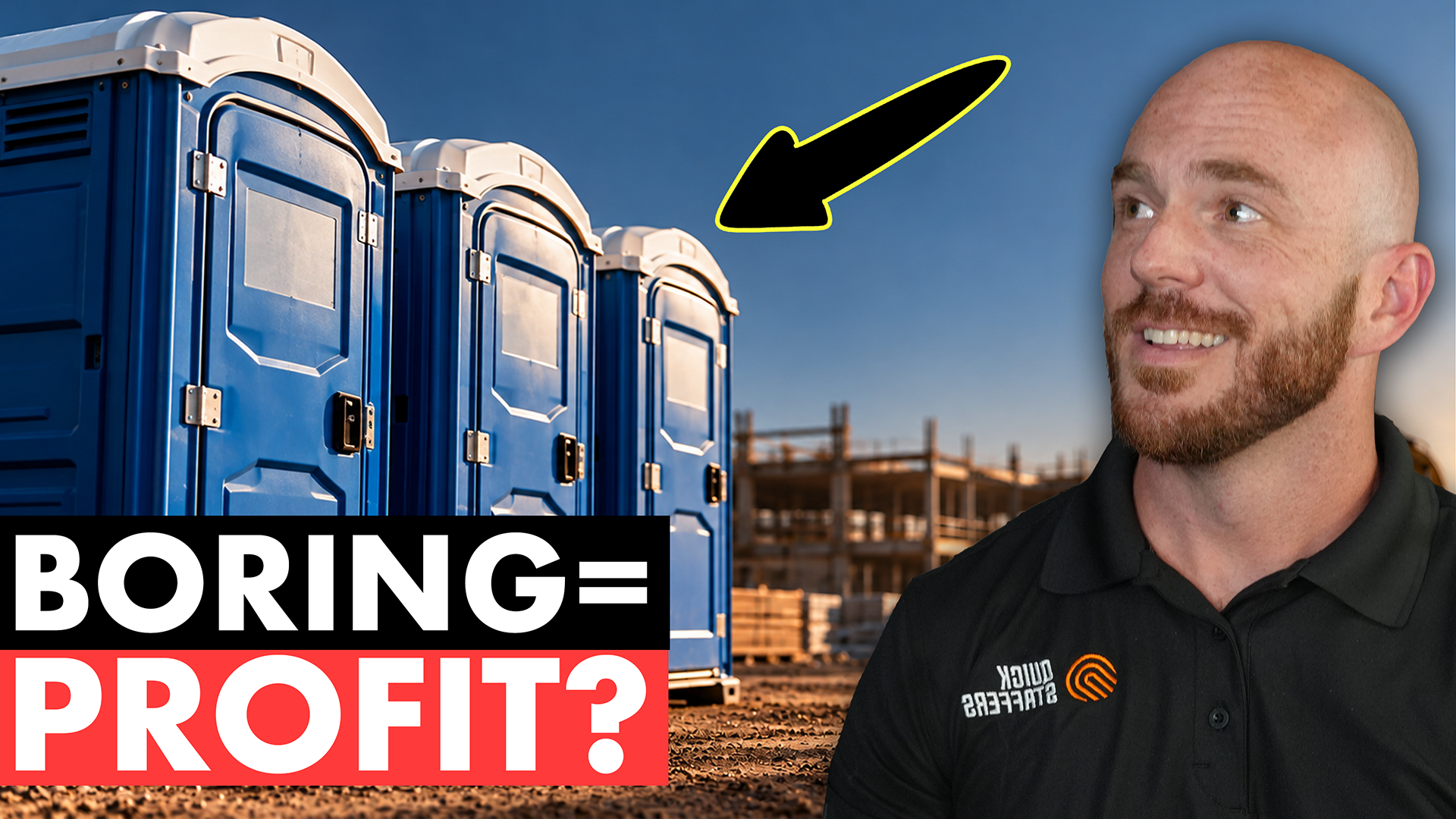
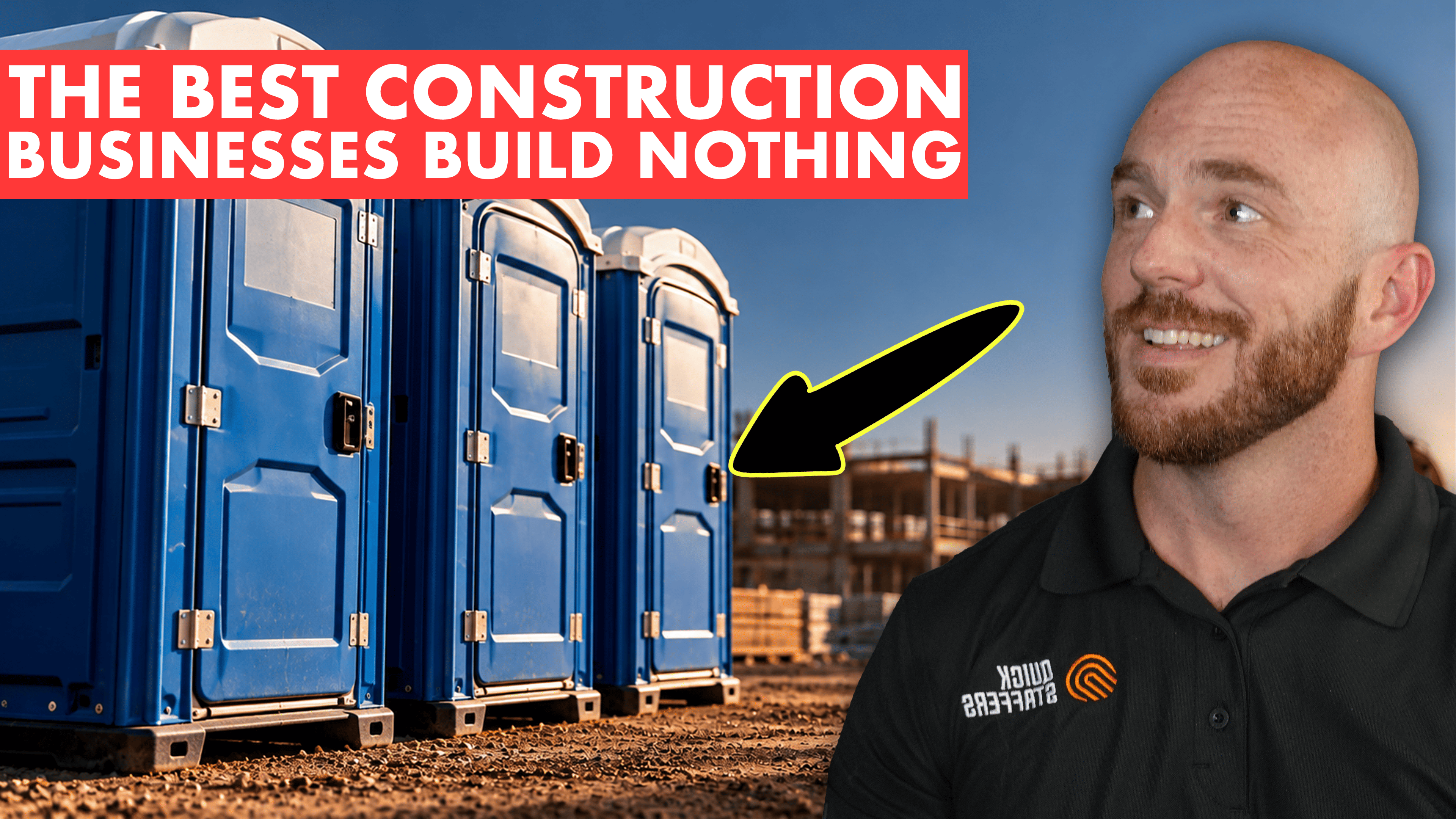
Portable toilets aren't exciting, but construction sites can't operate without them.
Unlike contractors who finish their work and leave, sanitation providers remain on-site throughout the project. They deliver units, establish cleaning schedules, restock supplies, and collect recurring service fees.
The real advantage comes from route density. The more customers you can serve within a concentrated geographic area, the more efficiently you can operate.
The opportunity: Build predictable recurring revenue through repeat service, efficient routes, and long-term contractor relationships.
3. Traffic Control
Road construction, utility repairs, telecommunications projects, and infrastructure work all create situations where traffic needs to be managed safely.
Traffic control companies provide the equipment, signage, barricades, and trained personnel needed to keep vehicles and pedestrians moving around active work zones.
It's a more operationally demanding business, but there's a major advantage: Contractors need dependable vendors they can trust.
Once you become that trusted provider, you have the opportunity to follow customers from project to project.
The opportunity: Become an essential service partner to contractors, municipalities, and utility companies that regularly perform work on public roads.
2. Temporary Power
Large construction projects need electricity long before permanent electrical infrastructure is available.
Temporary power companies provide generators, distribution panels, cables, transformers, lighting, and ongoing maintenance to keep job sites operating.
And the stakes are high. When a construction site loses power, crews can stop working, equipment can sit idle, and expensive delays can follow.
That makes reliability extremely valuable.
The opportunity: Generate revenue through equipment rentals, installation, maintenance, fuel services, and emergency support. The same capabilities can also serve industrial projects, disaster recovery operations, and large events.
1. Job Site Security
Construction sites can contain millions of dollars in equipment, materials, and partially completed work. When everyone leaves for the day, protecting those assets becomes a serious concern.
That's where dedicated job site security comes in.
Companies can deploy surveillance towers, motion detectors, cameras, and remote monitoring systems to protect sites throughout a project.
The business model shares many similarities with temporary fencing. Equipment gets deployed, customers pay for ongoing protection, and the systems can be relocated when projects finish.
What makes this particularly interesting is the growing role of AI and remote monitoring technology. These tools create opportunities to protect more locations without increasing staffing at the same rate.
The opportunity: Combine recurring equipment rentals and monitoring revenue with technology that can improve operational efficiency and scalability.
What These Businesses Have in Common
All five provide essential services, generate recurring revenue, and create opportunities for long-term customer relationships.
They come with challenges, including equipment costs, staffing, and maintenance, but the acquisition potential is clear.
Find an essential service, build strong customer relationships, and generate revenue across multiple projects.