Keurig Dr Pepper is making a massive move—acquiring one of the largest coffee platforms in the world. But this isn’t just another beverage deal. It’s a calculated platform play straight out of the private equity playbook.
In this episode, Jack breaks down what’s really happening behind the headlines—and why it matters for operators, owners, and buyers.
You’ll learn:
- Why this isn’t just a coffee acquisition—it’s a category domination strategy
- How distribution + brand scale creates outsized returns
- The real reason they may split the business into two companies
- Why structure—not just growth—can unlock billions in value
The takeaway:
Growth alone won’t save you. The way your business is structured, positioned, and scaled is what actually drives long-term value.
Follow Jack for more breakdowns:
X: https://x.com/thehvacjack
💼 Special Thanks to First Internet Bank!
Looking to buy or expand a business? First Internet Bank is a National Preferred SBA lender specializing in acquisitions for the skilled trades. Their SBA loan program offers up to 90% financing for business acquisitions, partner buyouts, and commercial real estate—plus optional lines of credit to fuel future growth. Unlike traditional lenders, they take a “how can we” approach, making deals happen for both first-time buyers and experienced operators.
👉 Special Offer: Mention Owned and Operated for a reduced good faith deposit and a complimentary deal review + buyside prequalification.
Connect with Alan Peterson from First Internet Bank here
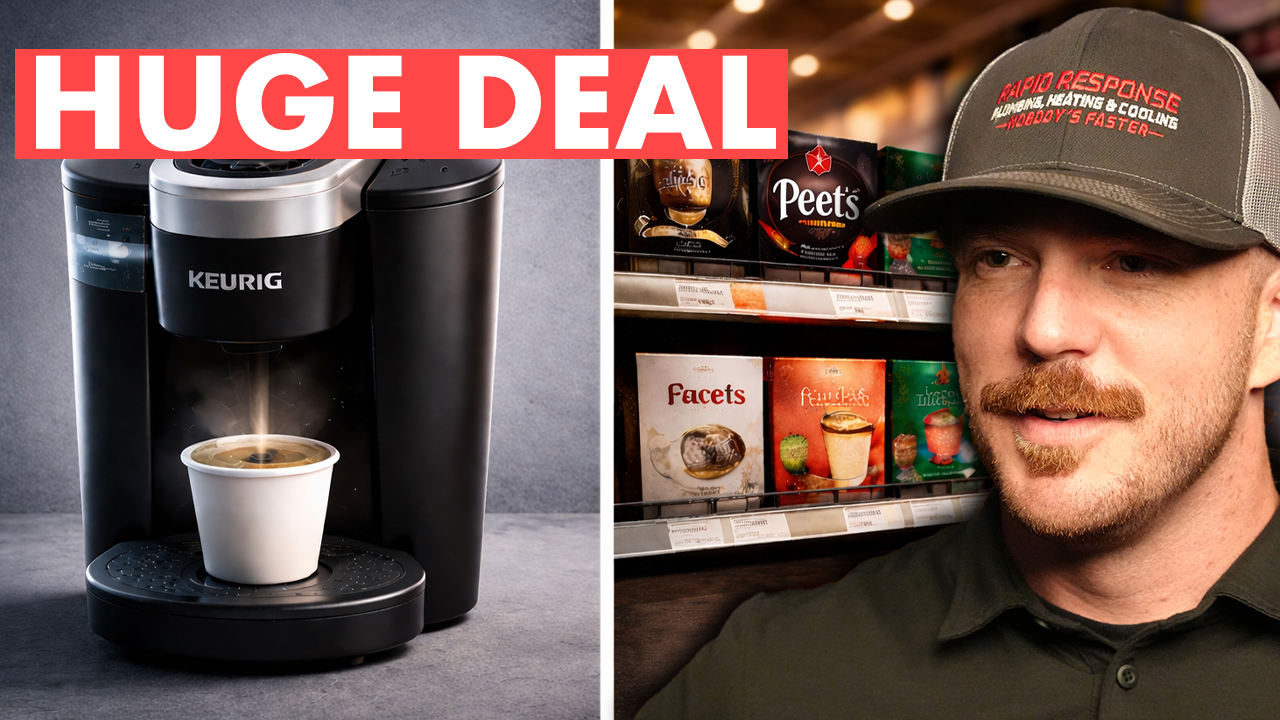
Keurig slash Dr. Pepper just made a monstrous coffee deal, and I don't think most people realize what they're actually doing here. On the surface, it looks just like another big acquisition, right? Pepsi buys non-named drink brands that are. Thriving Frito-Lay buys new snack companies, but Keurig, Dr. Pepper is acquiring 96% of JDE Pete's Coffee, one of the biggest coffee companies in the entire world. So yes, this is big. The most interesting part is actually the playbook because this is not just like a, Hey, let's buy a coffee company and get a little bit bigger. We have Keurig. Let's do. Petes now as well. No, this is looking like more, it's looking like buy a giant platform, integrate it, split it, and unlock its value and that's. Private equity behavior, and that's why I love this deal because what they bought is not just some niche tiny coffee brand with a cute story. They bought one of the biggest global coffee businesses on the planet. And so you're talking about brands like Pete's and Jacobs and their brand alone is doing like. 9.9 billion euros in revenue. I know I'm speaking in Euros, but bear with me here. I'm not converting for you guys, but it's across about a hundred markets. That's scale. That's not only scale, that's real scale. That's huge from a business perspective, and more importantly, it's, it plugs in obvious hole in their business because Keurig has been an amazingly strong brand in the us. Uh, they have the pods, they have at-home Coffee. They have a broad single serve ecosystem. But JDE, Pete's gives them something a little bit different. It gives them actual global distribution, global shelf space, global brands, and a much bigger global footprint outside the US for coffee. So this is not just adding revenue, it's not adding like, Hey, this little $300 million brand, it is filling up the map. And when you put the two and two together, you get a real strategy. They're trying to own. Coffee across all formats, across all regions. Pods, retail, packaged coffee, cafe, exposure, ready to drink, domestic, international. This is not just a product play, this is a platform play, and that's what gets me so excited about this because that is the part that operators should be paying attention to in any industry. Any industry you're in watching this. It's super interesting as a business nerd, because the smartest companies are not just asking, how do we get bigger? They're asking, how do we become the natural owner of the category? What plays do we need to make to, to own this section of the category worldwide? And it just, it's such a different question. And then it even gets better, right? Because the plan is to apparently split this into two different companies. One company becomes the beverage business, Dr. Pepper and the rest of the non-coffee stuff. And then the other side of the business becomes the global coffee company. And that's the move, right? That's the whole move because. Coffee inside a mixed beverage conglomerate is valuable. But coffee, a coffee platform in its own standalone business focused and streamlined and it's ebitda. You know, strategized is way more valuable 'cause now it has its own distribution. So it's a completely different story. It's a completely different strategy with different leadership and, and different capital allocations and potentially different multiples at the end when they try to sell this thing. This is a classic, you unlock value through separation. And public companies are getting more aggressive about this because they're finally starting to copy what private equity has been doing. And they've been doing this for years. Uh, they figured out a long time ago that, that sometimes the value isn't in just owning the asset. Sometimes the value is owning how the asset is actually structured. And that's a huge lesson because as operators, we think value creation in terms of sale growth, margin improvement, cutting costs, gross margin, ebitda. And that stuff matters. Like it all really matters, but the structure matters too. And it matters a lot because you can create value through just organizing your assets better, tightening your story and making the business easier to understand from the buyer's perspective or making it just easier to scale. Uh, and that's exactly what this feels like here. And then on top of all this, of course there's more and there's more, uh, there's, there's an operator bet in here, but the current CEO of JDE Petes is Raphael Oliviera. I'm saying that wrong, is expected to lead the coffee business. And I think that makes a ton of sense because this is not a visionary founder type of move. This is an execution move, and they need somebody who has run massive global distribution before and managed the complexity and keep things moving. Um. All while, like the organizational furniture is, is rearranged, so that's operator territory. So I love it when an operator gets one of these seats. And when you look at the background, he's, he is from Crafts Hines, Goldman Sachs, big systems, big brands, big scale. And this is clearly a bet on execution, not charisma, not story, just execution. So how do they create value here in a few obvious ways. Distribution synergies. Keurig has reach, JDE. Pete's has reach, but there's some strong, but they're different di reach in different ways. And so they work super synergistically together. Uh, and anytime you can take a portfolio of strong brands and give them wider distribution, huge upside. Second, we got branding scale, a portfolio. This big always has brands that are under leveraged. Brands that can travel to better places, do better in different areas. And so now that they have an open distribution market, they'll do better to be able to place these brands in the correct places at the correct times. And so that'll give them benefits from having more focus, having a more focused parent who can do those kind of things. And third, and lastly, it's just operational efficiency, right? You have. Um, it's boring. I know it's woo woo. Welcome to the show. But you have procurement, supply chain manufacturing, shared services, big overhead rationale and org design, like all of it focused on just coffee. It's going to get focused and that's gonna drive efficiencies. There's less organizational slop as you split the two, just because, hey, you're not buying sugar and caramel, you're just focusing on coffee. Sorry. Sugar and caramel being the soft drink market. I mean, I think this is the huge upside case and, and there is a little bit of risk though, right? There's always risk to these kind of deals. There's always risk to this kind of complexity and it's not gonna be a layup. 'cause the first obvious risk is, uh, integration complexity. These are huge. Global businesses with tons of moving parts. I mean, I do this on a very small level and it's hard. I couldn't imagine doing this on a multinational global level. Big integration sounds smart until they get ugly fast, right? Um, and that's just, that's just the case. Uh, the second risk is the spinoff itself. It's easy to say, we're gonna separate this to gain value, but it's much harder to actually pull it off without any kind of drift or internal politics or. Overload of bureaucratic nightmare because you're doubling procurement. You're doubling positions that normally you just had one person for. Uh, and that can slow the whole machine down. It can actually sink the whole ship, if you will. Third is performance during transition. So the J curve, J curve, almost every single time when a business gets acquired starts off slow and then ramps after people get the hang of it. So this is something that. All operators across every size business acquisition, underestimate 'cause When management is busy integrating, reorganizing, selling to the market, selling their new product or their new story, the business generally loses a step. And so as growth softens, you need to make sure. That during the middle of this transition that you understand that and have contingency plans for that. And I hope they do. I'm sure they do. They're a giant company that has already planned this out more than some small YouTuber, so I don't think it's risk free, but I do think it's smart, uh, because this is not some dumb coffee roll up. It's important. You, you know, this is not just buy more stuff and smash the market caps together and hope it plays. It's a focus on a large acquisition that's gonna drive a platform and create specialization. And that's why I think this deal matters beyond coffee. 'cause I think it's repeatable in almost any industry. It's a playbook for how to win when you focus and you diversify to kind of focus on the 80%. In the 80 20 rule, if you'll focus on wins, specialization scales. And structure creates the value. That's the play here. Those are the big three. If you like what you heard, comment below, tell me why or why not. I am wrong 'cause I don't know, coffee or some kind of crazy stuff like that. I do love coffee and I'm on a lot of it right now, so leave me a like, leave me a follow and I'll see you guys next time.