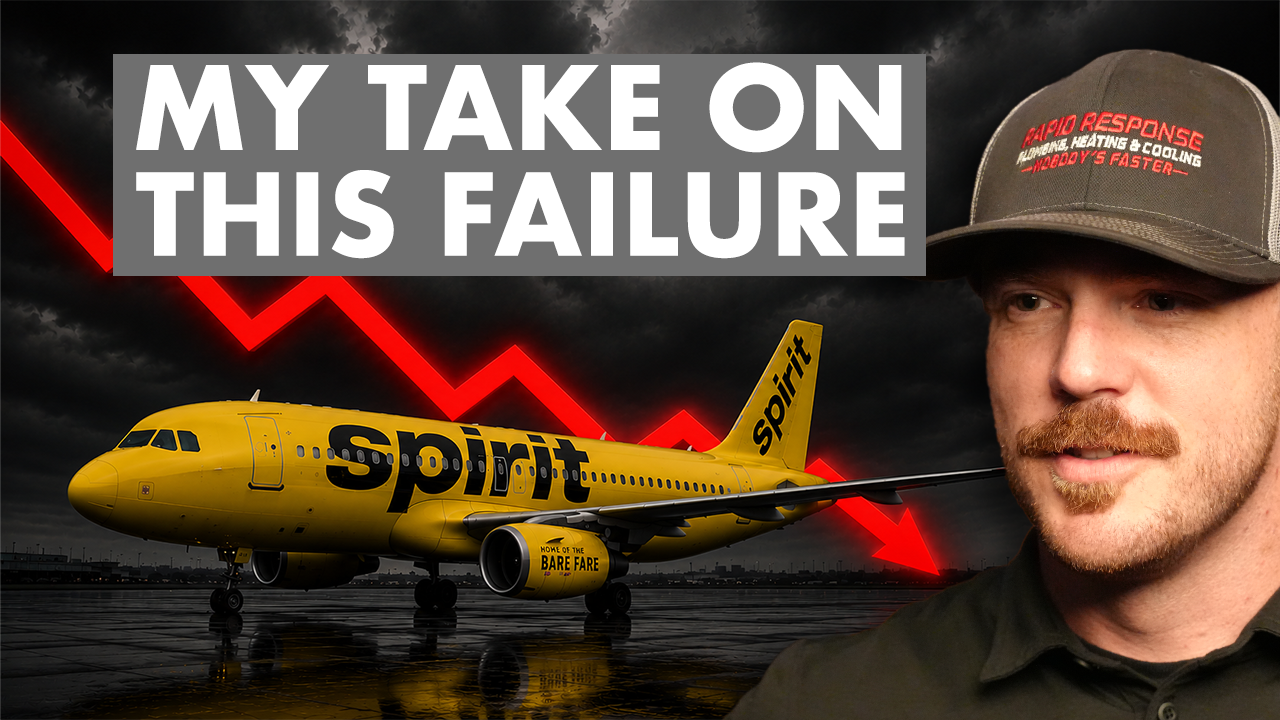
A lot of home service companies are quietly building the Spirit Airlines version of an HVAC, plumbing, or electrical business. And that’s a BIG mistake.
Ultra-low dispatch fees. Cheapest install in town. Deep discounts everywhere. “Free” everything upfront with the hope that the back end makes up for it later.
And for a while, it works.
Cheap pricing gets the phone to ring. It drives volume. It gets homeowners to click the ad, fill out the form, or book the estimate.
But the problem starts when your entire business model depends on staying cheaper than everyone else forever.
That’s the trap.
In the trades, your costs rarely stay flat long enough to sustain that strategy long term. Labor gets more expensive. Trucks get more expensive. Equipment gets more expensive. Insurance goes up. Fuel goes up. Marketing costs go up. Interest rates go up.
Meanwhile, homeowners are becoming more educated buyers.
They will still shop price. But they also care about response times, professionalism, financing options, communication, reviews, guarantees, memberships, and overall experience.
That’s where a lot of operators get squeezed.
If your only differentiator is “we’re cheaper,” you leave yourself with almost no margin for error when the market changes.
The strongest operators in the trades are building businesses with multiple advantages layered together:
- Strong brand reputation
- High review counts and ratings
- Fast speed-to-lead systems
- Financing and payment flexibility
- Membership programs
- Better customer communication
- Strong technician training
- Better operational efficiency
- Lifecycle marketing and repeat business
Watch: How to make your business grow strong and fast
Price still matters. It always will.
But cheap alone is fragile.
You see this happen constantly in contracting. A company undercuts the market aggressively to gain volume. Then labor costs rise, install callbacks increase, marketing gets expensive, or cash flow tightens up. Suddenly the margins disappear and the business starts operating with no room to breathe.
The companies that survive long term usually have something deeper than price protecting them.
Some have operational scale. Some have better service. Some have stronger customer loyalty. Some dominate local reviews. Some win on financing. Some win on speed and consistency.
But very few great businesses win solely because they are the cheapest forever.
That’s the real lesson from Spirit Airlines.
Low price can absolutely be part of your strategy. But if it’s your only strategy, you’re fighting a knife fight every single day.