When people evaluate a business, they usually start with revenue, EBITDA, and equipment.
Those numbers matter, but they only tell part of the story.
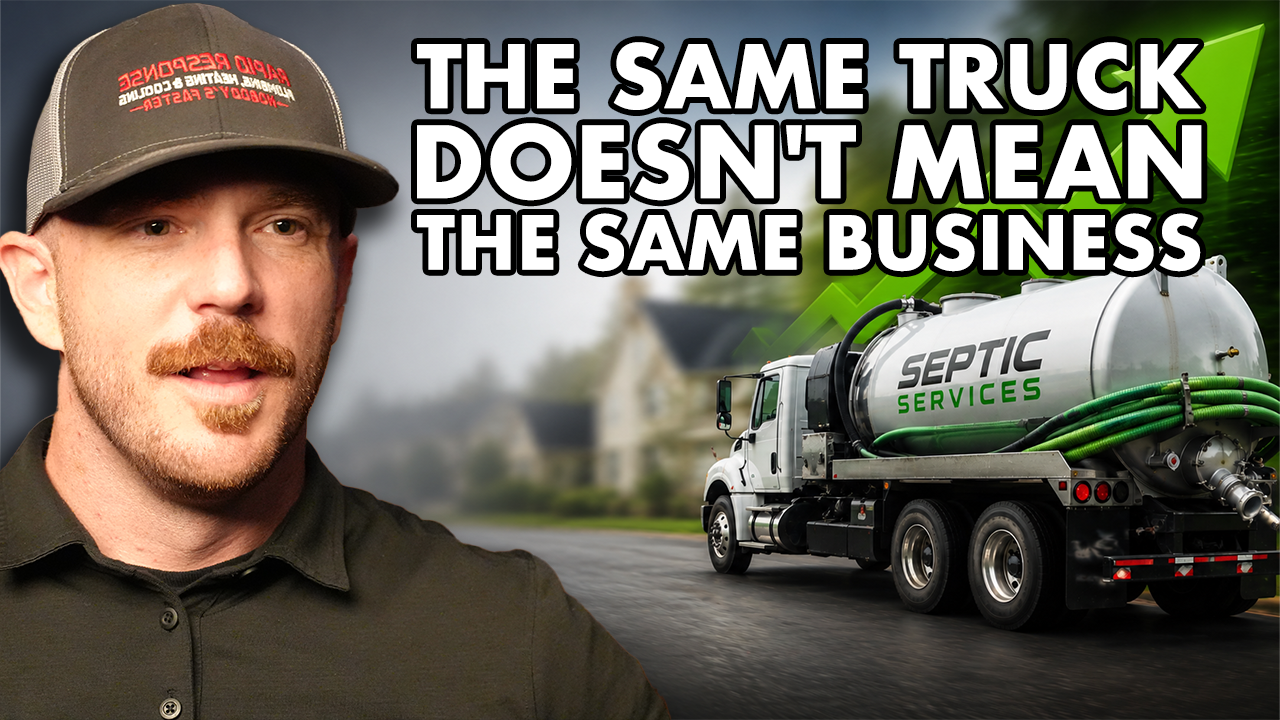
Two companies can generate the same revenue, operate the same trucks, and produce similar margins while having very different economics. The business model is often what separates them.
Take grease trap pumping and residential septic service.
On the surface, they're almost identical. A vacuum truck arrives, pumps out a tank, and moves on to the next job. Once you look past the equipment, the economics begin to change.
Grease trap businesses are built around recurring commercial contracts. Restaurants, hotels, schools, and commercial kitchens require regular service, creating predictable routes, recurring revenue, and greater visibility into future demand.
Residential septic businesses are driven primarily by homeowner demand. Customers call when something breaks, they're selling a home, or they're overdue for maintenance. That creates urgency, opportunities for larger repair work, and a less predictable schedule.
Those differences influence almost every aspect of the business:
- Customer acquisition strategy
- Scheduling and route density
- Truck utilization
- Hiring and staffing
- Revenue forecasting
- Business valuation
Each model has its own advantages.
Recurring commercial routes provide stable scheduling, dense operations, and consistent cash flow. Residential service often creates additional repair opportunities that increase average revenue per customer.
When you're evaluating an acquisition, the financial statements are only the starting point. The more valuable questions focus on how the revenue is produced.
Ask questions like:
- How much revenue comes from recurring contracts?
- How often does the average customer buy?
- What percentage of work is scheduled versus reactive?
- How dense are the service routes?
- How much of next month's revenue is already on the calendar?
Those answers reveal how the business operates and how predictable future performance will be.
Revenue tells you where the business has been, but the operating model tells you how the business will perform going forward.