



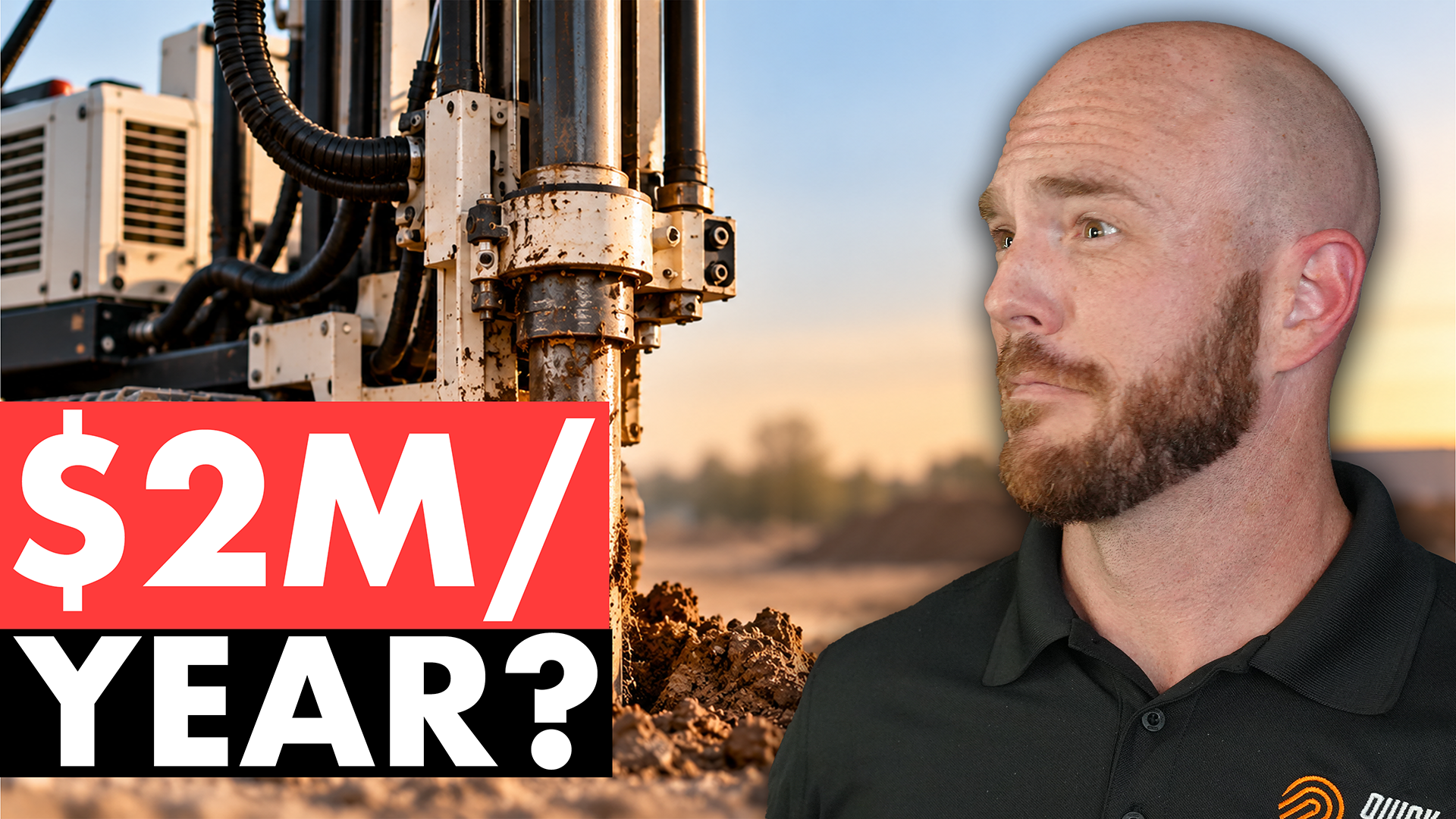
Environmental and geotechnical drilling is one of those businesses most people never think about. But every time someone buys an old gas station, redevelops an industrial property, or starts a major construction project, somebody needs to figure out what’s happening underground.
That’s where the driller comes in.
Read: This “Boring” Business Can Make $5,000 a Day
Environmental consultants need soil and groundwater samples. Engineers need to understand the soil and rock supporting a new warehouse, apartment building, bridge, or highway. The drilling company owns the equipment and expertise required to get that information.
And there are multiple ways to get paid:
- Mobilization fees to get your equipment to the site
- Daily rig rates that can run thousands of dollars
- Per-foot drilling charges
- Monitoring well installation
- Additional labor and materials
- Standby, decontamination, and other field services
The equipment creates a meaningful barrier to entry. A used Geoprobe can easily cost $100,000 to $200,000, while larger rigs can approach $400,000. That eliminates a lot of the competition you see in lower-cost service businesses.
But the part I like most is the customer base.
You don’t need 10,000 customers. You might need 20 or 30 environmental consulting, geotechnical engineering, civil engineering, and contracting firms that regularly need drilling work.
If I were starting this business, that’s where I’d focus first.
I’d build a list of every environmental and engineering firm within my service area. Then I’d figure out which ones subcontract their drilling and start selling directly to them. The pitch isn’t complicated: We answer the phone, show up when promised, keep our equipment running, document everything correctly, and make your project easier.
From there, I’d expand around the same customer base. Start with direct-push environmental work, then add monitoring wells, geotechnical sampling, hollow-stem auger capabilities, rock coring, and difficult-access equipment as demand justifies the investment.
Most importantly, I wouldn’t rush to become the environmental consultant.
I’d rather have five consulting firms winning projects and all five calling me when they need drilling. They get to avoid spending hundreds of thousands of dollars on equipment, training, maintenance, and specialized employees.
I get to become the boring subcontractor they can’t operate without.
That’s a business model I like.
.png)
