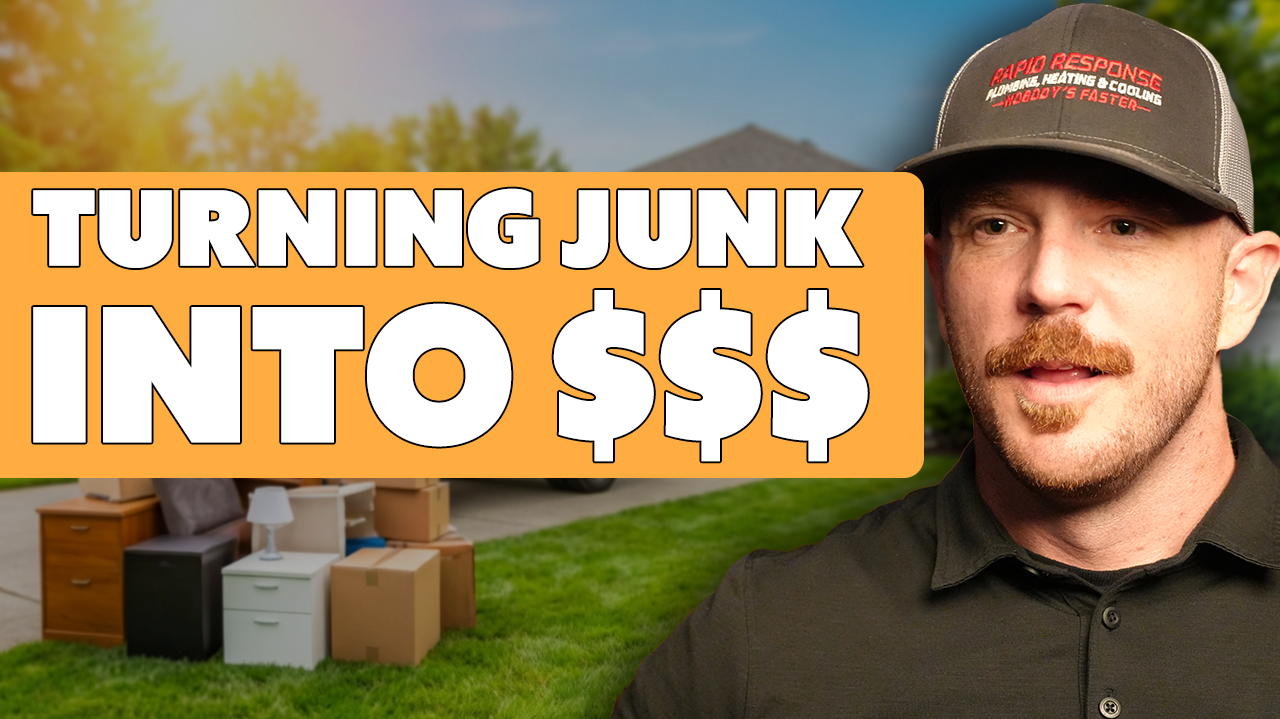
From the outside looking in, junk removal appears to be a hauling business.
In reality, however, it’s a lead generation and operations business. The trucks just execute the work.
The real asset is demand. If the phone isn’t ringing, you don’t have a business. You have a truck and a dump bill.
That’s why the operators who win focus upstream. They build systems around lead flow, pricing discipline, and route efficiency.
The Business Is Built On Lead Flow
Junk removal has low barriers to entry. Anyone can buy a truck and a trailer.
That means the competitive advantage rarely comes from the physical work. It comes from who controls the leads.
Most demand flows through:
- Google Local Services Ads
- Google Maps and reviews
- Referral partners like property managers, contractors, and realtors
- Repeat relationships with landlords and property management companies
When you acquire a junk removal company, this is what you’re actually buying.
You’re buying a phone that rings.
The trucks depreciate. The real value sits in reviews, rankings, referral relationships, and brand recognition.
The Unit Economics Matter More Than The Work
Once the lead comes in, the business becomes a math problem.
You have to understand the numbers behind every job:
- Cost per lead
- Lead-to-book rate
- Average ticket
- Labor cost per job
- Disposal costs
- Net profit per job
Small mistakes compound fast.
If your pricing discipline slips or disposal costs creep up, you can end up paying to go to work.
That’s why pricing needs to be tied to clear metrics. Volume-based pricing, consistent estimating, and disciplined quoting protect margins.
Where The Real Profit Comes From
The physical job is only part of the equation.
The operators who make money focus on a few operational levers.
Speed to lead. Whoever answers the phone first usually wins the job.
Disposal strategy. Landfill rates, recycling options, donations, and transfer stations can swing margins dramatically.
Route density. Packing multiple jobs into tight geographic routes reduces drive time and increases daily revenue.
Average ticket expansion. Add-on services like hot tub removal, shed teardown, minor demo, or curbside pickups increase job value without dramatically increasing cost.
These operational decisions are where the margin lives.
Why Buyers Overpay For These Businesses
Junk removal companies are often mispriced because buyers focus on surface-level metrics.
They see revenue, trucks, and a crew.
What actually matters is whether the lead flow and systems survive after the owner leaves.
If the owner answers every phone call, manages every relationship, and sets every price, the business can fall apart quickly.
The best acquisitions have:
- Multiple lead channels
- Partner relationships generating repeat work
- Documented pricing and dispatch systems
- A booking process that works without the owner
Those are the signals that the business will continue producing revenue after a transition.
The Real Skill Is Operating The System
Junk removal is easy to start.
Margins are tight, labor churn is common, trucks break, and disposal costs fluctuate. Without strong operational leadership, small problems compound quickly.
The operators who succeed aren’t the strongest guys moving couches.
They’re the ones who build systems that control lead flow, pricing, logistics, and margin on every job.