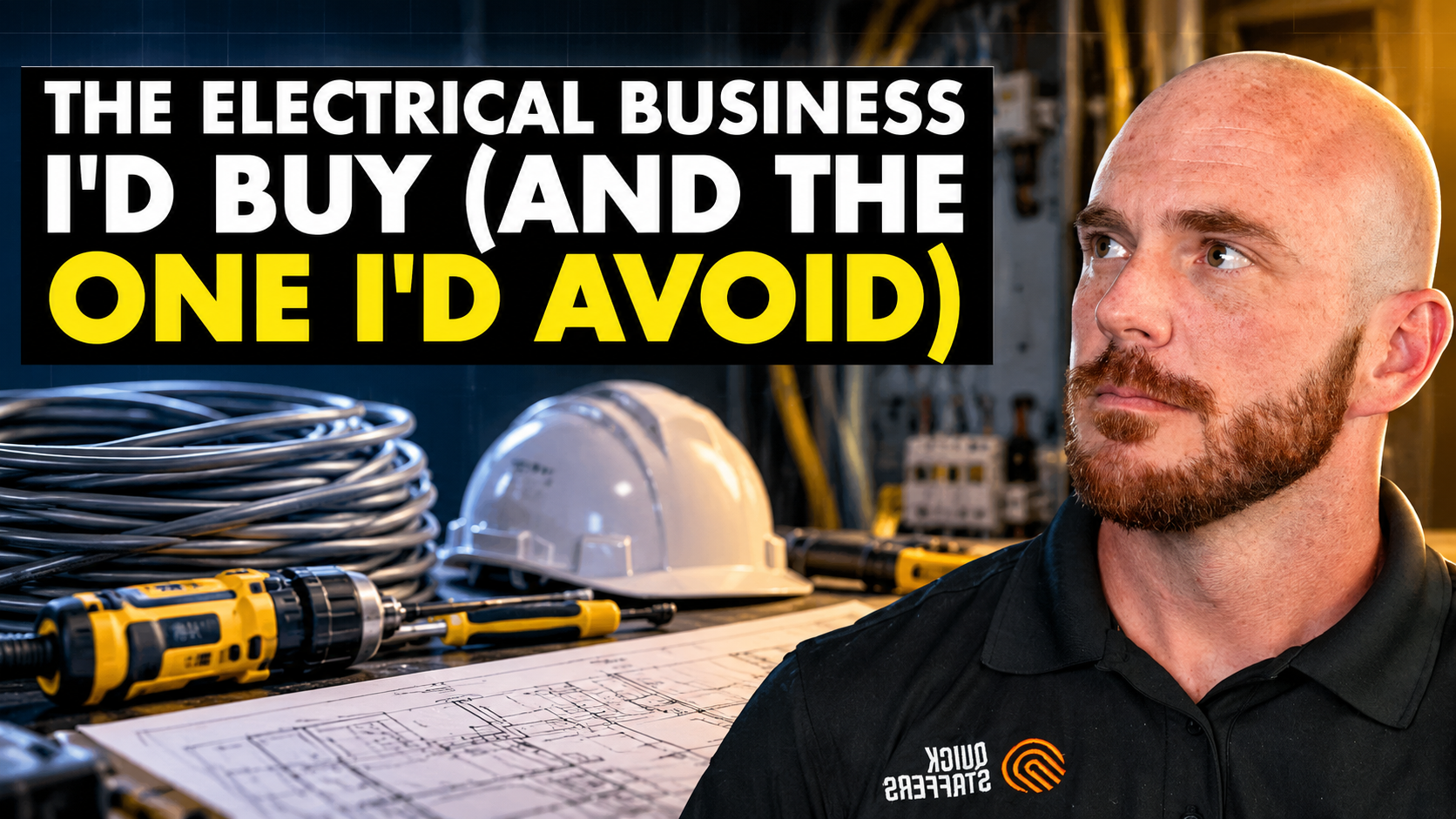
Electrical service companies might be one of the best acquisition opportunities in home services right now. But there's an important distinction buyers need to understand.
A residential electrical service company and an electrical contracting company are two very different businesses. They have different customers, margins, operating models, and growth opportunities.
Watch: From $700K to $15M: How He Built an Electrical Business in 5 Years
And if I were buying one today, I know exactly which I'd choose.
Why Residential Electrical Service Is So Attractive
Think about how much electricity the average household uses today compared to 20 or 30 years ago.
EV chargers, induction ranges, hot tubs, home offices, and heat pumps are putting more demand on electrical systems that weren't originally designed to handle it.
That's creating opportunities for residential electricians.
A homeowner might call about a broken outlet or faulty breaker. That's a $300 service call. But during that visit, the electrician might identify the need for a panel upgrade, dedicated circuit, surge protection, or generator.
Suddenly, a $300 job can turn into a $3,000 upgrade or even a $15,000 installation.
That's where the economics become attractive.
The Business Model Matters More Than Revenue
Now compare that with a company focused on new construction or large commercial electrical contracts (I’d avoid these).
These businesses can generate millions in revenue while carrying enormous payroll expenses, outstanding receivables, and relatively thin margins.
I'd much rather own a smaller residential service business with healthy margins than a larger construction contractor struggling to turn revenue into profit.
What I'd Look for Before Buying
If I were acquiring an electrical business today, I'd target one generating around $3 million in annual revenue, ideally with much of the early operating infrastructure already established.
I'd want to see:
- A strong residential service and replacement customer base.
- Consistent inbound leads, positive reviews, and an established local reputation.
- Technicians and managers who can operate without the owner.
- Flat-rate pricing, financing options, and a repeatable sales process.
- Proper licensing that can remain in place after the acquisition.
I'd be especially cautious if the seller holds the company's critical license, handles most sales, and manages the best technicians.
Because when that person leaves, what exactly are you buying?